You turn the key or press the start button, and nothing happens. Perhaps there is a rapid clicking sound. Perhaps the dashboard lights up but the engine will not turn. A flat battery is one possibility, but a non-starting car does not automatically need a new battery.
Before you reach for jump leads, take a moment to check your surroundings and describe the symptoms. A clear account can help an assistance provider decide whether a jump start is appropriate or whether your vehicle should go to a garage.
Start with safety, not the bonnet
In a driveway or a safely parked car, you have time to check the handbook. Beside moving traffic, your priority is getting yourself and passengers to safety. Do not attempt to jump-start a vehicle in a dangerous roadside position. If you are stranded in a live lane or in immediate danger, call 999.
Before any battery work, check the manufacturer's instructions. If the battery looks swollen, cracked or leaking, or you suspect it is frozen, do not attempt a jump start. Keep flames and sparks away and seek professional assistance.
Clues that can help explain the problem
- Rapid clicking and dim lights: these can point to insufficient electrical power, but connections or other faults may also be involved.
- The engine turns normally but does not start: a battery boost may not solve the problem. Fuel, ignition and other systems may need diagnosis.
- Normal lights but no engine movement: a starter fault, immobiliser issue or another electrical problem is possible.
- A battery warning light while driving: this can indicate a charging-system problem, rather than simply a battery needing a boost.
These are clues, not a remote diagnosis. Avoid repeatedly trying to start the engine: repeated attempts can drain the remaining power without addressing the cause. Follow the handbook and tell the operator what you observed.
Why a battery may lose charge
Lights or accessories left on can draw power while a vehicle is parked. Frequent short journeys may not replenish the energy used to start the engine. An ageing battery, poor connection or charging fault can also be involved. Cold weather can expose a battery that was already struggling.
If the car has been parked for a while, mention how long. If the battery has recently been replaced, say so: the cause may be something other than the battery itself. A successful jump start does not prove the charging system or battery is healthy.
Modern cars need the correct jump-start method
Battery locations and approved connection points vary. Some vehicles have designated terminals away from the battery; others require a specific procedure. Incorrect connections can damage electrical equipment and create a safety risk. Use the vehicle handbook rather than assuming that a procedure for another car will work.
Hybrid and electric vehicles need particular care. Their low-voltage battery is separate from the high-voltage traction system. Never touch high-voltage components, and do not use a hybrid or electric vehicle to jump-start another vehicle unless its manufacturer explicitly allows it. Tell your assistance provider the exact model before any work begins.
This article deliberately does not provide a universal cable sequence: the safe method depends on the vehicle and equipment. If you are unsure, arrange assistance.
What to tell us when you call
Have your registration, make and model ready. Explain whether there is clicking, slow cranking, no response or normal cranking without a start. Mention warning lights, recent battery work, how long the car has been parked and any visible damage. Share your location and whether the vehicle is safely accessible.
That information helps us discuss the next step with you. See our jump-start service in Leicester or flat-battery assistance. Call +44 7424 498454 from a safe location. If recovery is needed instead, you can discuss transport to your chosen garage.
After the engine starts
Do not assume the problem has disappeared. Follow the technician's and manufacturer's advice, and arrange a battery and charging-system check if the cause is uncertain or the fault returns. There is no single driving time that guarantees a fully recharged battery: condition, journey type and the charging system all matter.
Further reading
For safety precautions and manufacturer-dependent guidance, read the RAC guide to jump-starting a car. Always give your vehicle handbook priority over general online instructions.
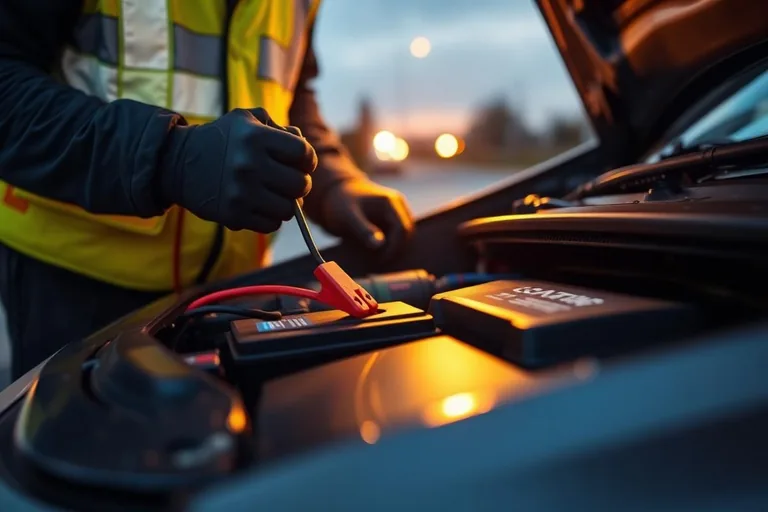
Photo: AI-generated illustration of battery assistance, not an instruction diagram or customer incident.