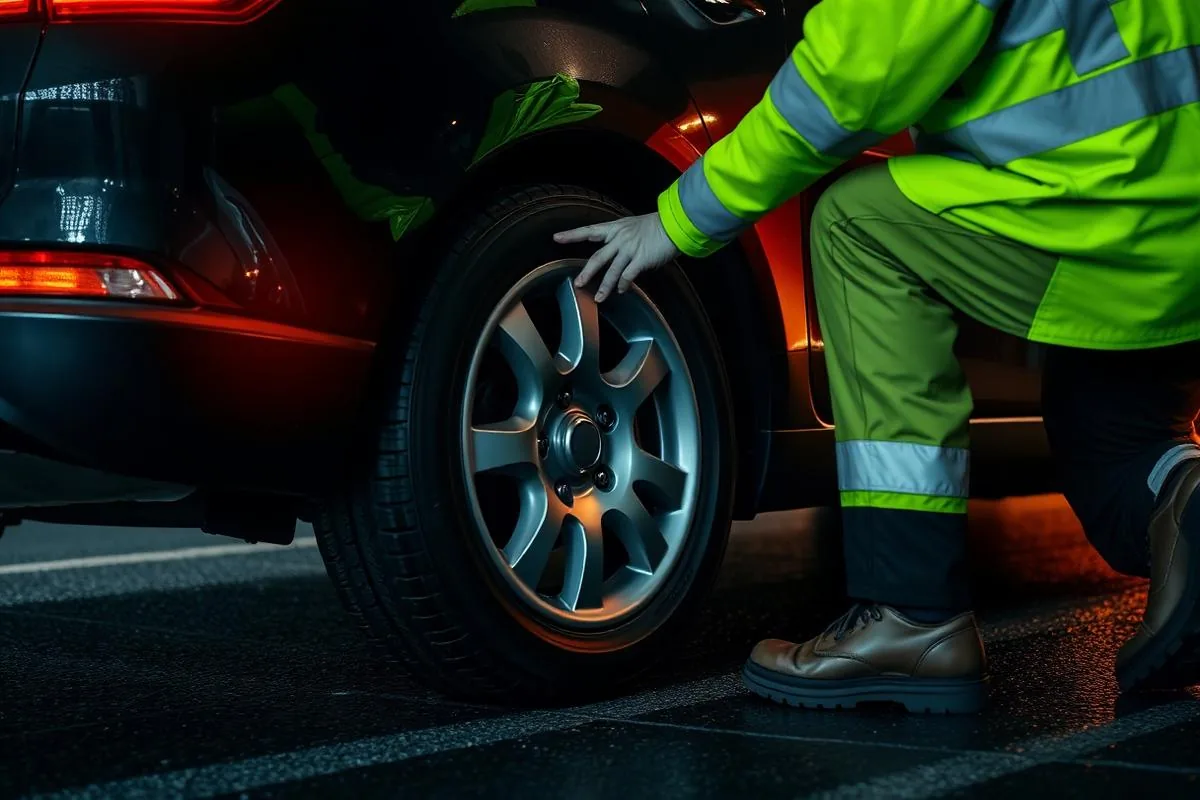
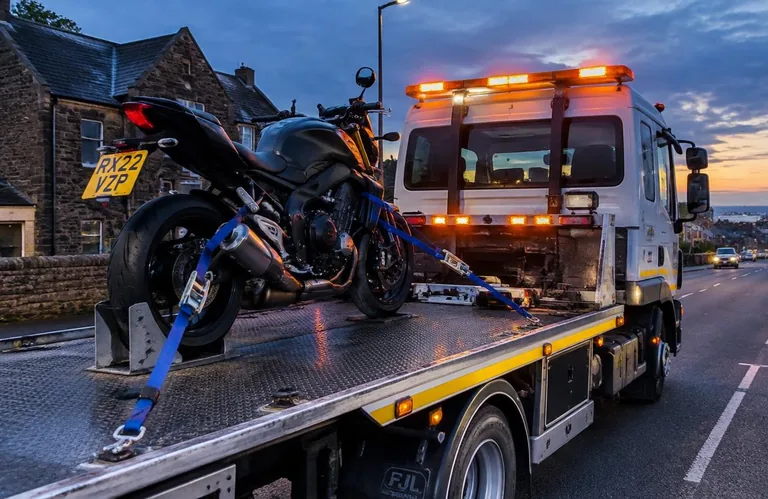
A motorcycle breakdown can leave you feeling exposed, particularly after dark or on a busy road. Whether you have a puncture, a non-starting engine or damage after a fall, the best next step is not always to try to ride home.
Motorbike recovery is about more than moving a vehicle. The operator needs to understand the bike's condition, arrange suitable loading and transport, and agree where it should be taken. Here is a practical guide to preparing for that conversation without putting yourself or your motorcycle at risk.
Get yourself safe before attending to the bike
If the motorcycle develops a problem, stop somewhere away from moving traffic if you can do so safely. Do not continue riding with a flat tyre, an obvious fluid leak or damage that affects steering or braking. If a warning light appears, follow your manufacturer's guidance rather than guessing what it means.
On a motorway, move to a place of relative safety if possible and stay well away from traffic, behind a barrier where safe. Never place a warning triangle on a motorway or attempt repairs there. If you are trapped in a live lane or there is immediate danger, call 999. Do not push a heavy bike through moving traffic to improve its position.
Tell the operator what type of bike you have
“A motorbike” does not describe its size, weight or loading needs. Share the make, model and registration, and explain whether it is a scooter, commuter, sports bike, cruiser or larger touring motorcycle. Mention fitted panniers, top boxes or accessories that change its dimensions.
Electric motorcycles also need model-specific handling. Tell the operator it is electric and report any impact damage, unusual heat or battery concerns. Do not touch damaged electrical components or try to investigate the battery pack yourself.
The most important loading questions
The operator needs to know whether the bike will roll freely, whether the steering is unlocked, and whether either wheel, brake or suspension appears damaged. A motorcycle with a locked wheel or bent fork may need a different collection approach from a bike that simply will not start.
- Are both tyres inflated, or is one completely flat?
- Can the bike be moved without dragging it?
- Is the steering lock engaged, and are the keys available?
- Has it fallen, been involved in a collision or leaked fuel or oil?
- Is there clear, safe access for a recovery vehicle?
Describe what you can see from a safe position. Do not attempt to lift a fallen bike alone if you could injure yourself, and do not force damaged parts to make it easier to load.
Preparing for collection without causing more damage
Only when it is safe, keep the keys available and gather any loose personal belongings. Let the operator decide when to release the steering lock or select neutral. Removing secure luggage is not always necessary; discuss it rather than taking the bike apart at the roadside.
If the circumstances allow, photographs of existing damage can be useful for your records. Take them from a safe place, not from a live carriageway. After a collision, preserve any information your insurer may need, but deal with injuries and immediate hazards first.
Ask how the bike will be transported
Motorcycles need suitable loading equipment and secure restraint appropriate to the particular bike. Discuss how it will be supported and how bodywork, accessories and vulnerable parts will be protected. Do not improvise by attaching a tow rope to another vehicle and attempting to ride behind it.
Before agreeing to collection, confirm the pickup point, destination and quoted charge. If you want the bike taken to a workshop, check that it can accept the delivery and arrange keys or handover. A locked gate or closed workshop can complicate an otherwise straightforward collection.
Breakdown recovery or planned transport?
An urgent roadside recovery and a planned motorcycle collection need different information. For a purchase or workshop move, share the collection contact, access arrangements, bike condition and destination opening times in advance. For a breakdown, first explain exactly where you are and whether you are safe.
MWR Recovery Leicester offers motorbike recovery and motorcycle transport. Call +44 7424 498454 to discuss your bike, location and destination. If the situation is not urgent, you can also request a quote. Do not send messages or make calls while riding.
Safety sources
Read Safe Driving for Life: what to do if your motorbike breaks down and the Highway Code breakdown guidance. Follow emergency-service instructions and your motorcycle handbook.
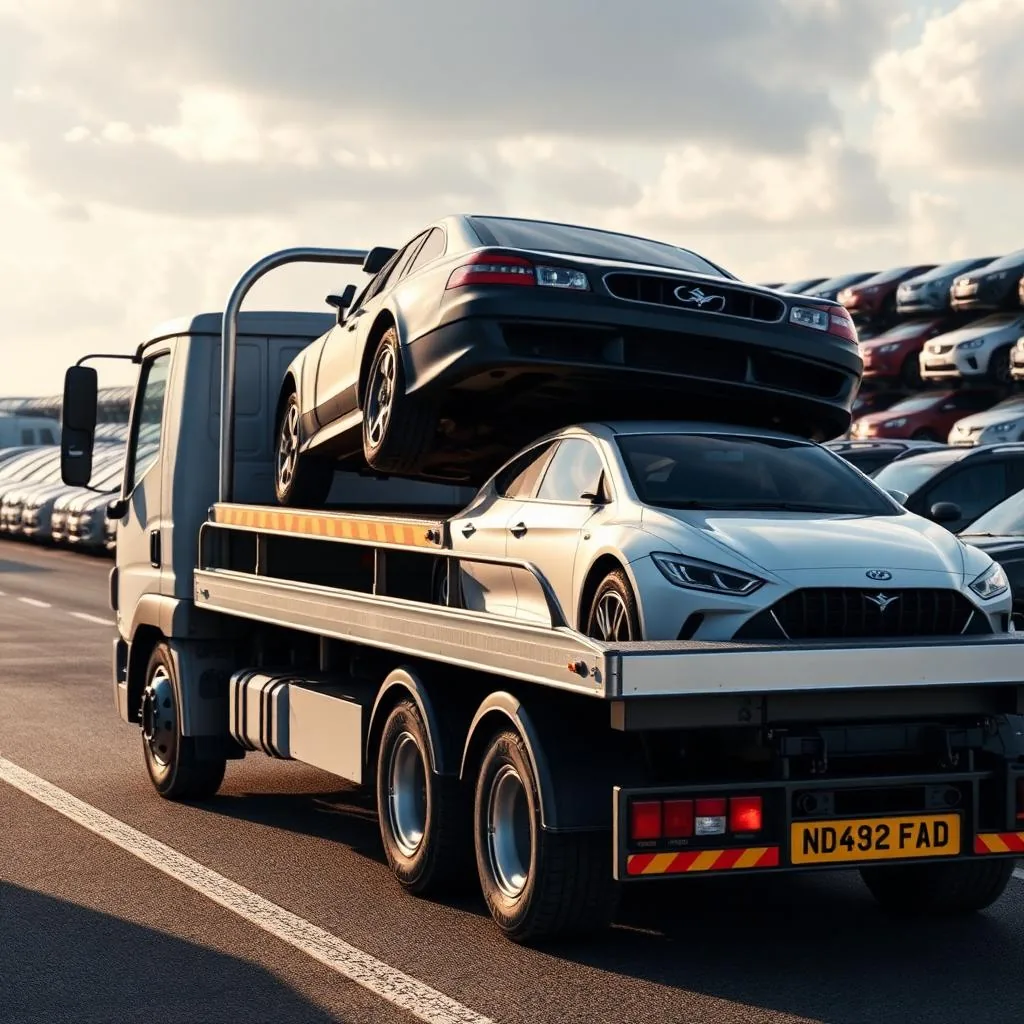
Photo: AI-generated illustration of motorcycle transport, not a customer recovery or a loading instruction.